10/11/2016
The Evolution of 2D Video Games
Tennis for Two is the first official game ever created. Tennis for Two is a game that simulates a game of tennis. It is also the first multiplayer game. Tennis for Two is a sports video games developed in 1958's by an American physicist William Higinbotham who designed the game in Brookhaven National Laboratory using post-war mainframes, designed for rapid codebreaking and the calculation of ballistic trajectories.
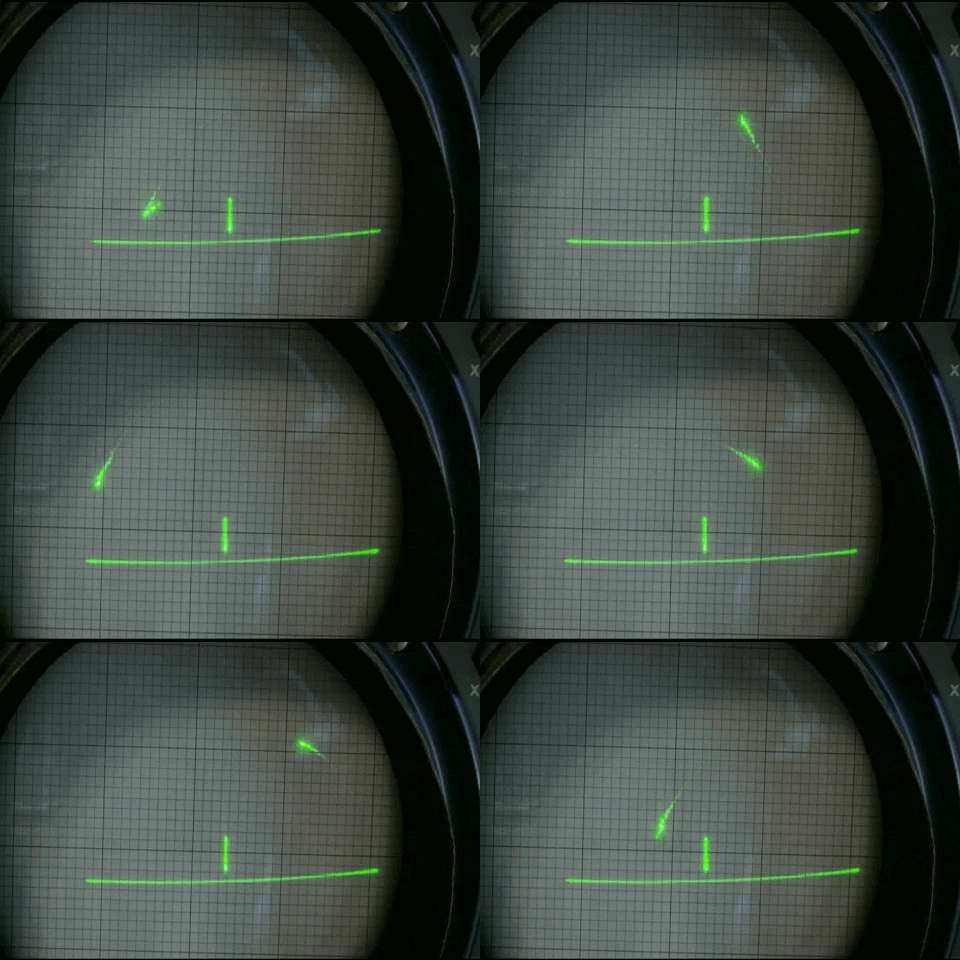
By the 1970's the commercial of electronic attractions were growing because of Arcade games which mass produced, self contained units which dispense coin-operated
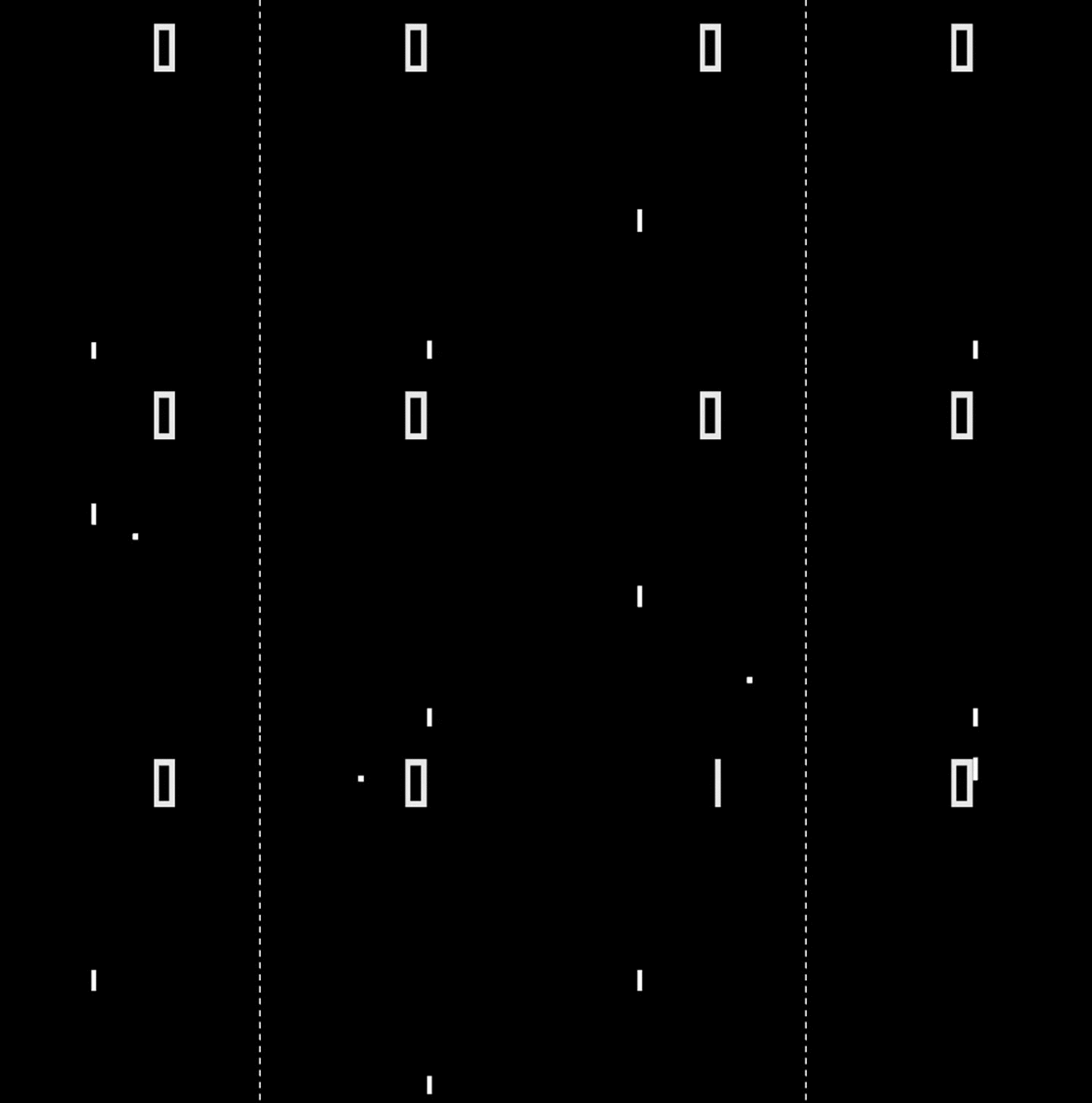
1972 was the introduction of Atari's Pong the most popular game of its era, and becoming the first commercially successful game. Pong is one of the earliest arcade video games and the very first sports arcade video game. Atrai engineer Allan Alcom designed and built Pong as a training exercise.
 |
| Pong |
The Magnavox Odyssey is the first commercial home video console. The Odyssey was developed by a small team led by Ralpha H. Bear and released by Magnavox. It was released in the United States in September 1972 and overseas the following year. The home video console sold over 100,000 units in 1927
The Magnavox Odyssey

As engines for computers became more powerful in 1974 video games evolved with them. Games of greater complexity became possible.
In 1976 Atari's released "Breakout" a game that was influenced by Pong with it's bat and ball technique however they added destructible bricks into the mix. The game was created by Nolan Bushnell team which was aided by Steve Jobs.

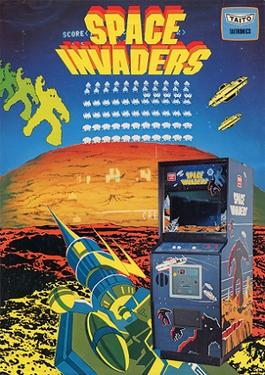
Anew wave of games in 1978 ushered in the golden age of arced, with Tatio Space invaders created by Tomohiro Nishikado and released in 1978. It was manufactured and sold by Taito in Japan, and was later licensed for production in the united states by the Midway division of Bally. Nishikado was inspired by popular media as Atari Breakout, The War of the World the novel and Star wars. In later years the game was later re-released on numerous platforms. The 1980 Atari 2600 quadrupled the system's sales and became the first "Killer app" for video games consoles.
1980's Namco Revolutionized the industry as the first video game to use RGB colour graphics. PAC-MAN. It opened gaming to female audiences. It was the first game to add features such as Power ups and Cut scenes. The game is regarded as one of the most influential video games of all time, the game introduced the maze chase game and stealth game genre, had an influence on the stealth game Metal Gear, where guards chase Solid Snake. It is also one of the highest grossing video games of all time, having generated more than $2.5 billion by the 1990's.

1981 was the introduction of Mario in Donkey Kong the Video game by Nintendo however Mario wasn't his name in this game, It was Jumpman. Donkey Kong is an early example of the platform game genre, as the gameplay focuses on maneuvering Jumpman across platforms while dodging and jumping barrels. Donkey Kong was the latest in a series of efforts by Nintendo to break into the North American market.

The North American (NA) video game crash of 1983, or known as Atrai shock in japan. Na and Japan were hit hard by a recession. A period of temporary economic decline during 1983-1985. Revenues had peaked around $100 million by 1985, a drop of almost 97%. The crash really effective the second generation of console video games for North America.
The crash led to companies like Atari and Apple franchise losing their power to publish games. In result people started joining third parties companies such as Activision which was founded by Atari progammers who left the company because they felt Atari did not pay employees based on sales and did not allow credits to appear on their games. Activision rush to the video game division, hoping to impress both stockholders and consumers.
1983 was the lunch of the NES (Nintendo Entertainment System) in Japan. NES is an 8-bit home video game console that was developed and manufactured by Nintendo. The NES was the best selling gaming console of its time. The NES helped rejuvenate the US video game industry after the video game crash in 1983.
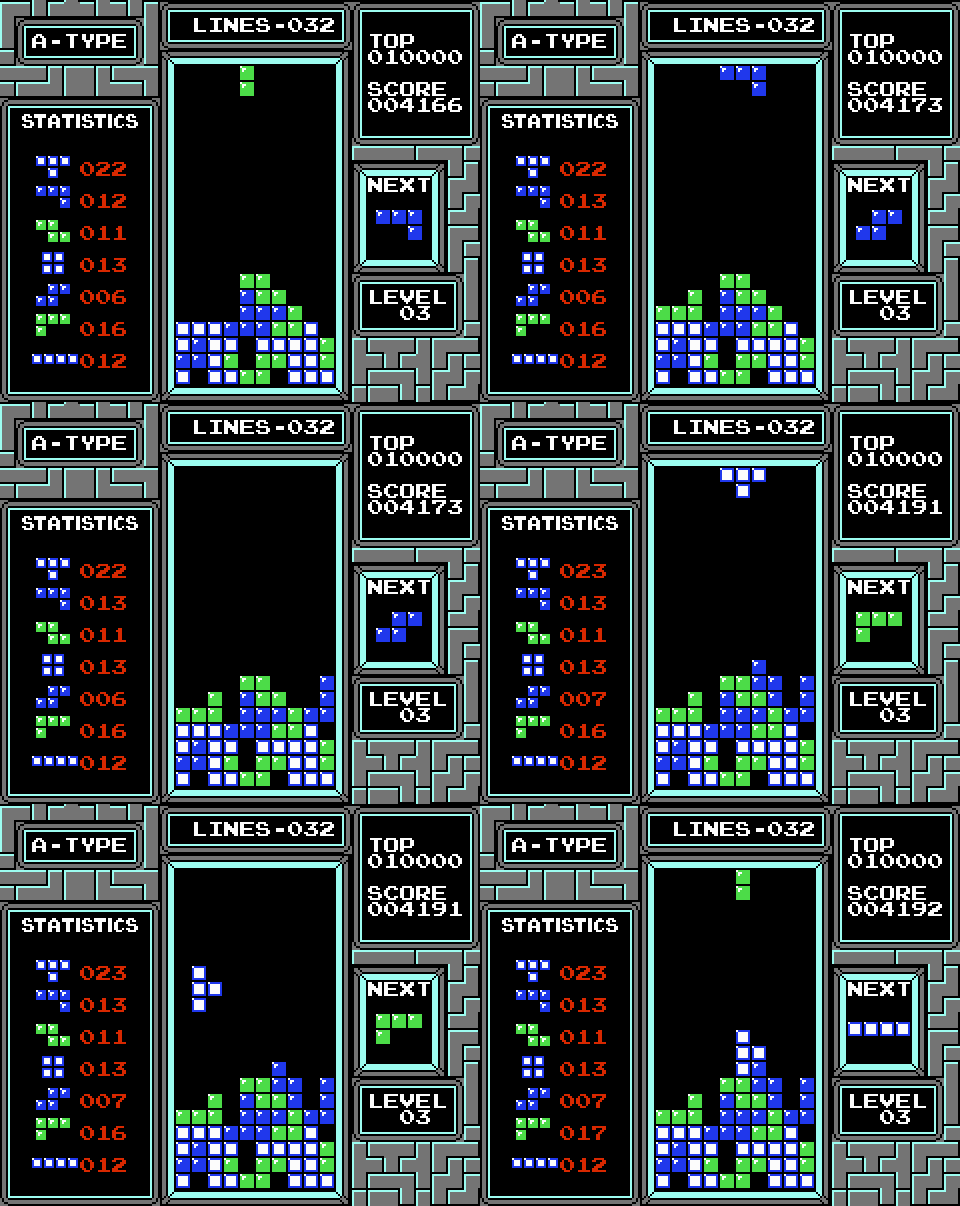
1984 was the introduction of Tetris. Tetris was the first ever entertainment software exported from the USSR to the US. By 1989. half a dozen different companies claimed rights to distribute the Tetris system. Tengen applied copyright for their Tetris Atari game for the Nintendo Entertainment system. In 1989 Sega created an arcade version of Tetris for Japan. It won Japanese Game of the Year the.
In 1985 the Americans release of the NES with Super Mario brothers which set sales record unmatched for decades. It is the first Super Mario series of games. The player controls Mario and in a two player game, a second players controls Mario Brother Luigi. The game focused on Jumping and shooting mechanic. Super Mario Brothers was the introduction of the Power up, Mushrooms which made Mario bigger.
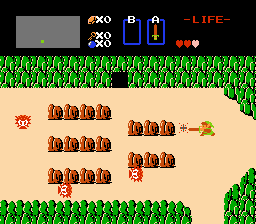
1986 was the introduction of The Legend of Zelda. Zelda introduced a blend of action and adventure set in fantasy land of Hyrule. The legend of Zelda was a bestseller for Nintendo, selling over 6.5 Million copies
1987 brought the classic. Mega Man by Capcom. Mega introduced keen platforming action and nonlinear stage selection. Mega Man was loved for it overall design, though the game was not a commercial success.
-easteranimation.gif)
The Nintendo Game Boy launched in 1989, going on to be the most successful handheld ever and the platform becoming the perfect platform for Tetris which was its most popular software sold for the Gameboy.

1989 SimCity kickstarted the City building category, by putting the player in a town planner' shoes
1991 was the introduction of Sonic the Hedgehog. Sonic is a 2D side scrolling platformer, the gameplay centers around Sonic's ability to run at high speed through levels incorporating springs, slopes, high falls and loop the loops. However Sonic is mostly known for its amazing visuals.

http://giphy.com/gifs/8bit-nintendo-KW3nydTAyPaU0
http://giphy.com/gifs/video-games-brookhaven-national-lab-OCuMnu33RJ9eM
https://www.youtube.com/watch?v=GoyGlyrYb9c
https://en.wikipedia.org/wiki/Magnavox_Odyssey
http://makeagif.com/FDGic6
http://www.polygon.com/2015/2/25/8111657/watch-googles-smart-ai-figure-out-how-to-beat-this-video-game-all-on
https://en.wikipedia.org/wiki/File:Space_Invaders_flyer,_1978.jpg
https://en.wikipedia.org/wiki/Pac-Man
http://makeagif.com/V9Whr5
https://en.wikipedia.org/wiki/File:Donkey_Kong_arcade_at_the_QuakeCon_2005.png
https://en.wikipedia.org/wiki/Nintendo_Entertainment_System
https://en.wikipedia.org/wiki/File:Legend_of_Zelda_NES.PNG
In 1976 Atari's released "Breakout" a game that was influenced by Pong with it's bat and ball technique however they added destructible bricks into the mix. The game was created by Nolan Bushnell team which was aided by Steve Jobs.
Anew wave of games in 1978 ushered in the golden age of arced, with Tatio Space invaders created by Tomohiro Nishikado and released in 1978. It was manufactured and sold by Taito in Japan, and was later licensed for production in the united states by the Midway division of Bally. Nishikado was inspired by popular media as Atari Breakout, The War of the World the novel and Star wars. In later years the game was later re-released on numerous platforms. The 1980 Atari 2600 quadrupled the system's sales and became the first "Killer app" for video games consoles.
1980's Namco Revolutionized the industry as the first video game to use RGB colour graphics. PAC-MAN. It opened gaming to female audiences. It was the first game to add features such as Power ups and Cut scenes. The game is regarded as one of the most influential video games of all time, the game introduced the maze chase game and stealth game genre, had an influence on the stealth game Metal Gear, where guards chase Solid Snake. It is also one of the highest grossing video games of all time, having generated more than $2.5 billion by the 1990's.
1981 was the introduction of Mario in Donkey Kong the Video game by Nintendo however Mario wasn't his name in this game, It was Jumpman. Donkey Kong is an early example of the platform game genre, as the gameplay focuses on maneuvering Jumpman across platforms while dodging and jumping barrels. Donkey Kong was the latest in a series of efforts by Nintendo to break into the North American market.
The North American (NA) video game crash of 1983, or known as Atrai shock in japan. Na and Japan were hit hard by a recession. A period of temporary economic decline during 1983-1985. Revenues had peaked around $100 million by 1985, a drop of almost 97%. The crash really effective the second generation of console video games for North America.
The crash led to companies like Atari and Apple franchise losing their power to publish games. In result people started joining third parties companies such as Activision which was founded by Atari progammers who left the company because they felt Atari did not pay employees based on sales and did not allow credits to appear on their games. Activision rush to the video game division, hoping to impress both stockholders and consumers.
1983 was the lunch of the NES (Nintendo Entertainment System) in Japan. NES is an 8-bit home video game console that was developed and manufactured by Nintendo. The NES was the best selling gaming console of its time. The NES helped rejuvenate the US video game industry after the video game crash in 1983.
1984 was the introduction of Tetris. Tetris was the first ever entertainment software exported from the USSR to the US. By 1989. half a dozen different companies claimed rights to distribute the Tetris system. Tengen applied copyright for their Tetris Atari game for the Nintendo Entertainment system. In 1989 Sega created an arcade version of Tetris for Japan. It won Japanese Game of the Year the.
In 1985 the Americans release of the NES with Super Mario brothers which set sales record unmatched for decades. It is the first Super Mario series of games. The player controls Mario and in a two player game, a second players controls Mario Brother Luigi. The game focused on Jumping and shooting mechanic. Super Mario Brothers was the introduction of the Power up, Mushrooms which made Mario bigger.
1986 was the introduction of The Legend of Zelda. Zelda introduced a blend of action and adventure set in fantasy land of Hyrule. The legend of Zelda was a bestseller for Nintendo, selling over 6.5 Million copies
1987 brought the classic. Mega Man by Capcom. Mega introduced keen platforming action and nonlinear stage selection. Mega Man was loved for it overall design, though the game was not a commercial success.
The Nintendo Game Boy launched in 1989, going on to be the most successful handheld ever and the platform becoming the perfect platform for Tetris which was its most popular software sold for the Gameboy.
1989 SimCity kickstarted the City building category, by putting the player in a town planner' shoes
1991 was the introduction of Sonic the Hedgehog. Sonic is a 2D side scrolling platformer, the gameplay centers around Sonic's ability to run at high speed through levels incorporating springs, slopes, high falls and loop the loops. However Sonic is mostly known for its amazing visuals.
Video
http://giphy.com/gifs/8bit-nintendo-KW3nydTAyPaU0
http://giphy.com/gifs/video-games-brookhaven-national-lab-OCuMnu33RJ9eM
https://www.youtube.com/watch?v=GoyGlyrYb9c
https://en.wikipedia.org/wiki/Magnavox_Odyssey
http://makeagif.com/FDGic6
http://www.polygon.com/2015/2/25/8111657/watch-googles-smart-ai-figure-out-how-to-beat-this-video-game-all-on
https://en.wikipedia.org/wiki/File:Space_Invaders_flyer,_1978.jpg
https://en.wikipedia.org/wiki/Pac-Man
http://makeagif.com/V9Whr5
https://en.wikipedia.org/wiki/File:Donkey_Kong_arcade_at_the_QuakeCon_2005.png
https://en.wikipedia.org/wiki/Nintendo_Entertainment_System
https://en.wikipedia.org/wiki/File:Legend_of_Zelda_NES.PNG
--------------------------------------------------------------------------------------------------------------------------


A professor, British writer and game researcher named Richard Allan Bartle created "The Bartle Types" where gamers can fit into 1 of 4 categories. Explorer, Achiever, Socializer and killer.

Killers - Like to provoke and cause drama or impose themselves over other players. Trolls, hackers, cheaters and attention seekers belong in this category, along with the most ferocious and skillful PVP (Players versus players) opponents.
Achievers - Are competitive and enjoy beating difficult challenges whether they are set by the game or by themselves. The more challenging the goal, the most rewarded they tend to feel.
Explorers - Like to explore the world, not just its geography but also the finer details of the game mechanics. These players may end up knowing how the game works and behave better than the game creators.
Socializers - Are often more interested in having relations with the other players than playing than playing the game itself.
Then a woman known as Nicole Lazzaro, who is known widely reconigsed as one of the top women in video games took Richard Bartle's statements can also be defined by types of fun. Easy fun, Serious Fun, People fun and hard fun which is called The Four Fun Keys

People Fun - Amusements from competition and cooperation
Easy Fun - Curiosity from exploration, role play, and creativity
Hard Fun - Fiero, the epic win from achieving a difficulty goal
Serious Fun - Excitement from changing the player and their world
I can use this game preferences to help me empathize with other types of games, I fit into Killer/Fiero. I can find games that other types of preferences like to play and give those games a try and I will attempt to see if there is anything I found enjoyable.
Here is a detailed grid of The Bartle Types and The Four Fun Keys:
PVP/Mechanics = Killer
Mechanices/Team = Soldier


In my spare time I will try out some games that fall in my empathy blind spots. I will play that game like the person who fits into that category and identify why they enjoy that game
Wikipedia. (2016). Richard Bartle. Available: https://en.wikipedia.org/wiki/Richard_Bartle. Last accessed 11th Nov 2016.
Kyatric. (2013). Bartle's Taxonomy of Player Types (And Why It Doesn't Apply to Everything). Available: https://gamedevelopment.tutsplus.com/articles/bartles-taxonomy-of-player-types-and-why-it-doesnt-apply-to-everything--gamedev-4173. Last accessed 11th Nov 2016.
11/11/2016
Psychology in Games
In today's lesson we were learning about Primary research, Primary research is information you conduct yourself while its alternative Secondary research is looking up information that was already researched by someone else.
In addition we also looked up another type of research; Qualitative and Quantitative. Qualitative is research that looks into the particulars of a problem and Quantitative is quantifying research, by gathering number data or statistics.
Researchers have been studying for years the important's of psychology in games. They got gamer's to play certain games to see their behaviors, performances and mental states, which developed their empathy to overcome their personal bias and they also showed their empathy blind spots. Empathy means they show the ability to understand and share the feelings of another. This helps the Game designers know what their target audiences want from them. Since I'll be taking the gaming industry seriously so I will be using this technique since I don't like a lot of games I have apply this to my work.
This means they showed the type of player they are and what type of games they hate.They have to come over their personal bias for example they might only like playing high action first person shooters while they hate calm games like Animal Crossing. They have to play the game as some who enjoys the game which means they have to do all the grinding, having the full experiences of the game and not just skipping out on the mission just to finish the game faster.
I have taken a Psychological map test called "The Big 5" OCEAN, which stands for Openness to Experience, Conscientiousness, Agreeableness, Extroversion and Neuroticism. We had to flip the graph to find out where we have less empathy.
This means they showed the type of player they are and what type of games they hate.They have to come over their personal bias for example they might only like playing high action first person shooters while they hate calm games like Animal Crossing. They have to play the game as some who enjoys the game which means they have to do all the grinding, having the full experiences of the game and not just skipping out on the mission just to finish the game faster.
I have taken a Psychological map test called "The Big 5" OCEAN, which stands for Openness to Experience, Conscientiousness, Agreeableness, Extroversion and Neuroticism. We had to flip the graph to find out where we have less empathy.

Blue Arrows = My result
White Arrows = My empathy blind spots
Here are my results in detailed
White Arrows = My empathy blind spots
Here are my results in detailed
YOU ARE LOW IN OPENNESS TO EXPERIENCE
Your score for openness was low, at 45%. Openness describes a person’s tendency to think in abstract, complex ways. High scorers tend to associate ideas and see relationships between things. Low scorers tend to see things more literally, and focus more on the practical, straightforward, and concrete.
People who are low in openness are typically:
- Practical
- Traditional
- Conventional
- Most comfortable in familiar surroundings
Low Openness scorers are more likely to be politically conservative and to spend their leisure time enjoying mainstream entertainment, including sports, movies, and pop music. They do not tend to be interested in art and usually avoid high-brow cultural activities like the opera or the ballet.
YOU ARE MODERATELY CONSCIENTIOUS
Your score for conscientiousness was 55%, which is in the moderate range.
Conscientiousness describes a person’s ability to exercise self-discipline and control in order to pursue their goals. High scorers are organized and determined, and are able to forego immediate gratification for the sake of long-term achievement. Low scorers are impulsive and easily sidetracked.
The concept of Conscientiousness focuses on a dilemma we all face: shall I do what feels good now, or instead do what is less fun but will pay off in the future? Some people are more likely to choose fun in the moment, and thus are low in Conscientiousness. Others are more likely to work doggedly toward their goals, and thus are high in this trait.
Your score for Conscientious is in the moderate range, indicating that you are fairly average in your tendency to respond to impulses. You probably have some long-term goals and are fairly successful in pursuing them, but can be sidetracked sometimes when a particularly attractive diversion presents itself.
YOU ARE MODERATELY EXTRAVERTED
Your score for Extraversion was moderate, at 50%.
Extraversion describes a person’s inclination to seek stimulation from the outside world, especially in the form of attention from other people. Extraverts engage actively with others to earn friendship, admiration, power, status, excitement, and romance. Introverts, on the other hand, conserve their energy, and do not work as hard to earn these social rewards.
Extraversion seems to be related to the emotional payoff that a person gets from achieving a goal. While everyone experiences victories in life, it seems that extroverts are especially thrilled by these victories, especially when they earn the attention of others. Getting a promotion, finding a new romance, or winning an award are all likely to bring an extrovert great joy.
In contrast, introverts do not experience as much of a “high” from social achievements. Thus, they don’t make as much effort to seek them out. Introverts tend to be more content with simple, quiet lives, and rarely seek attention from others.
Your mid-range score on this dimension indicates that you are fairly average in your motivation to seek out social rewards. You probably have some desire for admiration, influence, and prestige, but you can also be content when you’re not winning recognition from others.
YOU ARE LOW IN AGREEABLENESS
Your score for Agreeableness was low, at 57.5%.

Agreeableness describes a person’s tendency to put others’ needs ahead of their own, and to cooperate rather than compete with others. People who are high in Agreeableness experience a great deal of empathy and tend to get pleasure out of serving and taking care of others. They are usually trusting and forgiving.
People who are low in Agreeableness tend to experience less empathy and put their own concerns ahead of others. Low scorers are often described as hostile, competitive, and antagonistic. They tend to have more conflictual relationships and often fall out with people.
Your low score in Agreeableness indicates that you put your own needs first most of the time. You may see other people as a threat to your ability to get what you want, and you often suspect ulterior motives in others. You are mostly unwilling to sacrifice your own needs in the service of other people.
YOU ARE MODERATE IN NEUROTICISM
Your score for Neuroticism was moderate, at 37.5%.
Neuroticism describes a person’s tendency to experience negative emotions, including fear, sadness, anxiety, guilt, and shame. While everyone experiences these emotions from time to time, some people are more prone to them than others.
This trait can be thought of as an alarm system. People experience negative emotions as a sign that something is wrong in the world. You may be in danger, so you feel fear. Or you may have done something morally wrong, so you feel guilty. However, not everyone has the same reaction to a given situation. High Neuroticism scorers are more likely to react to a situation with fear, anger, sadness, and the like. Low Neuroticism scorers are more likely to brush off their misfortune and move on.
Your score indicates that you are fairly typical in your tendency to experience negative emotions. You probably feel sadness, worry, anger, and guilt about as much as the average person. You are neither overly reactive, nor especially resistant to the stresses of life.
A professor, British writer and game researcher named Richard Allan Bartle created "The Bartle Types" where gamers can fit into 1 of 4 categories. Explorer, Achiever, Socializer and killer.

Killers - Like to provoke and cause drama or impose themselves over other players. Trolls, hackers, cheaters and attention seekers belong in this category, along with the most ferocious and skillful PVP (Players versus players) opponents.
Achievers - Are competitive and enjoy beating difficult challenges whether they are set by the game or by themselves. The more challenging the goal, the most rewarded they tend to feel.
Explorers - Like to explore the world, not just its geography but also the finer details of the game mechanics. These players may end up knowing how the game works and behave better than the game creators.
Socializers - Are often more interested in having relations with the other players than playing than playing the game itself.
Then a woman known as Nicole Lazzaro, who is known widely reconigsed as one of the top women in video games took Richard Bartle's statements can also be defined by types of fun. Easy fun, Serious Fun, People fun and hard fun which is called The Four Fun Keys
People Fun - Amusements from competition and cooperation
Easy Fun - Curiosity from exploration, role play, and creativity
Hard Fun - Fiero, the epic win from achieving a difficulty goal
Serious Fun - Excitement from changing the player and their world
I can use this game preferences to help me empathize with other types of games, I fit into Killer/Fiero. I can find games that other types of preferences like to play and give those games a try and I will attempt to see if there is anything I found enjoyable.
Here is a detailed grid of The Bartle Types and The Four Fun Keys:
Novelty - Open to experience
Challenge - Conscientiousness
Harmony - Agreeableness
Stimulation - Extraversion
Novelty
Fantasy/Exploring = Adventurer
Exploring/Realism = Investigator
Realism/Building = Architect
Building/Fantasy = Imagineer
Challenge
Hard/Work = Master
Work/Easy = Persevere-er
Easy/Not Work = Dabbler/Cheater
Not work/Hard = Talent
Stimulation
Multiplayer/Thrilling = Party Animal
Thrilling/ Single player = Lone wolf
Single player/Calm = Hermit
Calm/Multiplayer = Shepherd
Harmony
Team/Context = Good sport
Context/PVP = KnightPVP/Mechanics = Killer
Mechanices/Team = Soldier

Here I put the game into their respective sections:

In my spare time I will try out some games that fall in my empathy blind spots. I will play that game like the person who fits into that category and identify why they enjoy that game
Wikipedia. (2016). Richard Bartle. Available: https://en.wikipedia.org/wiki/Richard_Bartle. Last accessed 11th Nov 2016.
Kyatric. (2013). Bartle's Taxonomy of Player Types (And Why It Doesn't Apply to Everything). Available: https://gamedevelopment.tutsplus.com/articles/bartles-taxonomy-of-player-types-and-why-it-doesnt-apply-to-everything--gamedev-4173. Last accessed 11th Nov 2016.
--------------------------------------------------------------------------------------------------------------------------
18/11/2016
Mario Maker
In today's we were creating platforms on Nintendo's Super Mario Maker on the WillU. Super Mario Maker is a side scrolling platform video game with a game creation system with it.
Today's lesson objective was to develop a greater understand of the conventions of a level 1 2D plat former
Before we started creating our levels on Mario Maker, we had to first start plan. We used grid sheets for our planning sheets because it was the closes thing to the Super Mario Maker grid creation system.
Here's our are concept are


This activity was enjoyable to do because it was something refreshing. The only problem I had with this activity was that I felt that my group added in too many mechanics to call this level a level one.
--------------------------------------------------------------------------------------------------------------------------
Player Acting
Player acting is learning to play a game as though I am someone else, to develop player empathy. I usually play multiplayer/thrilling games such as Call of Duty, so I decided to adventure into my empathy blind spots. The game I picked was Little Big Planet 2 because its the complete opposite of want I usually play, because its a calm single player game.
Little Big Planet 2 is a puzzle platform video game.
After playing the first two levels, I realized how calming and creative the game. I love how they used Stephen Fry for the narrator, because his voice is perfect for the witty banter the games uses. I also liked how they offered me customize characterization during level. Something I noticed was there was completely no action through out the first few levels usually I would find this boring but they somehow kept my interest.
The only thing I didn't, was that they gave characters voices for the cut scenes, however they didn't give the game characters voices during the gameplay.
I can easily understand that someone with virtually no creativity, would most likely find this game boring, However it is still something new and exciting for a lot of people.

No comments:
Post a Comment